
How Does a Split Core Current Transformer Work?
Introduction
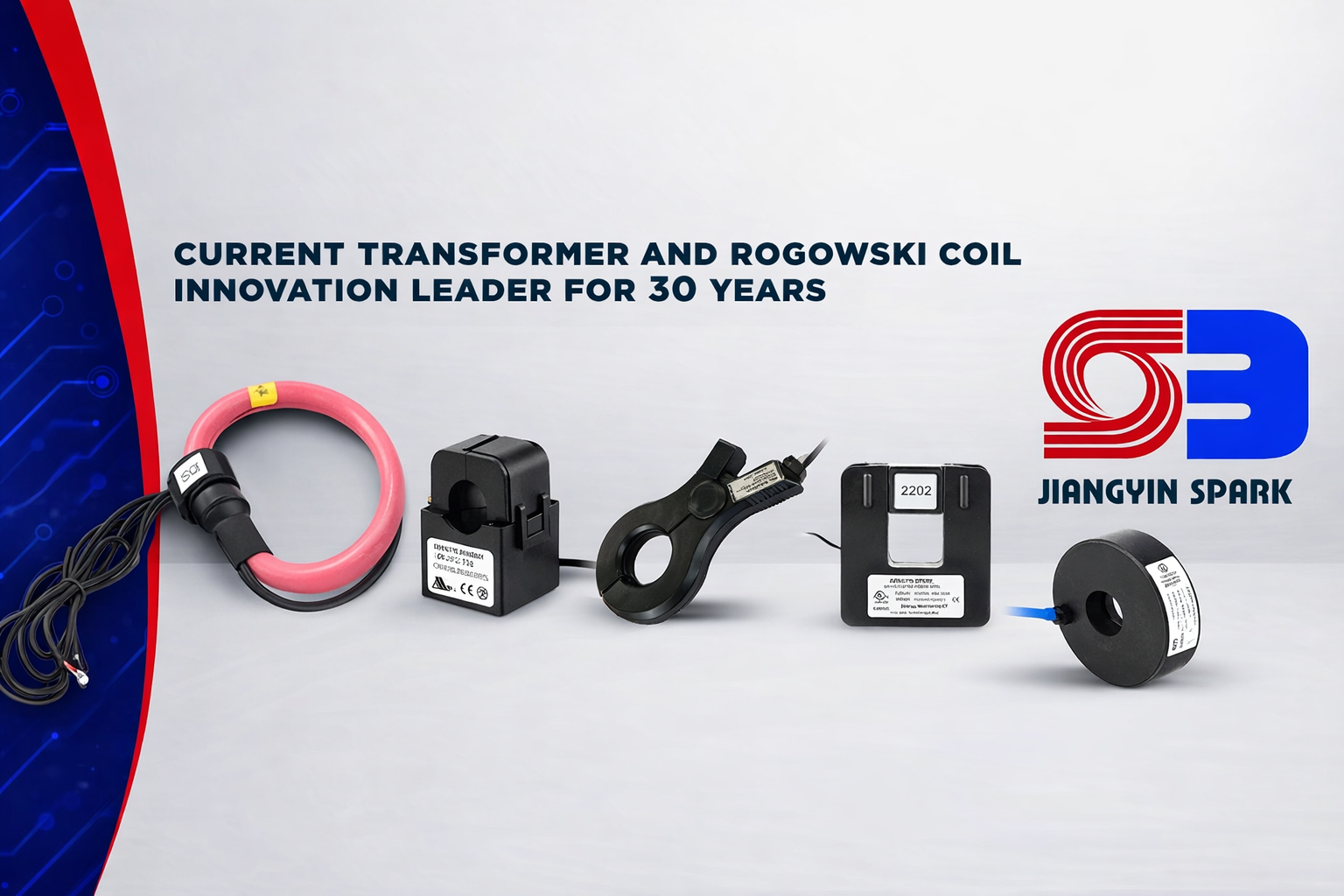
A Split Core Current Transformer (often called a Split Core CT) is a type of current transformer designed to measure alternating current (AC) in electrical systems without disconnecting the conductor. Because of its openable core structure, it is widely used in energy monitoring, power measurement, and smart metering applications.
Split core current transformers are commonly used in industries such as building energy management, solar power monitoring, and electrical panel metering.
In this article, we will explain how a split core current transformer works, its key components, and why it is widely used in modern power monitoring systems.
What Is a Split Core Current Transformer?
A Current Transformer (CT) is an electrical device that converts high current into a smaller, measurable current signal.
A split core current transformer differs from a traditional solid-core CT because its magnetic core can open and close. This allows the CT to be installed around an existing conductor without disconnecting the cable.
Key advantages include:
-
Easy installation
-
No need to disconnect wires
-
Safe current measurement
-
Ideal for retrofit installations
Because of these advantages, split core CTs are commonly used in energy monitoring systems and electrical measurement devices.
Main Components of a Split Core CT
A typical split core current transformer consists of several main components:
1. Magnetic Core
The magnetic core is typically made from high-permeability materials such as silicon steel or nanocrystalline alloys.
Its function is to transfer the magnetic flux generated by the primary conductor to the secondary winding.
2. Primary Conductor
Unlike traditional transformers, the primary winding of a CT is usually the single conductor carrying the measured current.
When current flows through the conductor, it generates a magnetic field around it.
3. Secondary Winding
The secondary winding consists of many turns of copper wire wrapped around the magnetic core.
The magnetic field generated by the primary conductor induces a proportional current in the secondary winding.
4. Split Core Mechanism
The core can open and close using a hinge or latch system.
This design allows the transformer to be installed around an existing cable without interrupting the circuit.
Working Principle of a Split Core Current Transformer
The working principle of a split core CT is based on electromagnetic induction, which is described by Faraday’s Law of Electromagnetic Induction.
Step-by-step process:
-
Current flows through the primary conductor
The electrical cable carrying current acts as the primary winding. -
Magnetic field is generated
According to electromagnetic principles, alternating current creates a magnetic field around the conductor. -
Magnetic flux flows through the CT core
The magnetic field passes through the high-permeability core of the CT. -
Voltage is induced in the secondary winding
The changing magnetic flux induces a proportional current in the secondary winding. -
Output signal is produced
The output signal can be measured by meters, monitoring devices, or protection systems.
Current Transformer Ratio
One important parameter of a current transformer is its turns ratio.
For example:
Secondary Current: 5A
CT Ratio: 100:5
In many energy monitoring applications, CTs provide outputs such as:
-
5A output
-
1A output
-
0.333V voltage output
These signals are compatible with modern energy meters and monitoring equipment.
Applications of Split Core Current Transformers
Split core CTs are widely used in electrical measurement and energy management systems.
Common applications include:
-
Energy monitoring systems
-
Smart meters
-
Solar inverter monitoring
-
Electric vehicle charging stations
-
Power distribution panels
-
Industrial automation systems
-
Building energy management systems
Because installation is simple and does not require shutting down the system, split core CTs are especially useful for retrofit energy monitoring projects.
Advantages of Split Core Current Transformers
Compared with traditional solid core CTs, split core CTs offer several advantages.
Easy Installation
The openable core allows installation without disconnecting the conductor.
Safe Operation
They provide electrical isolation between high-current circuits and measurement equipment.
Flexible Applications
Split core CTs can be installed in existing electrical systems with minimal modification.
Compact Design
Modern CT sensors are compact and lightweight, making them suitable for electrical panels and monitoring devices.
Frequently Asked Questions
What is the difference between split core and solid core CT?
A split core CT can open and close, allowing installation without disconnecting the conductor. A solid core CT requires the cable to be disconnected before installation.
Are split core CTs accurate?
Yes. High-quality split core CTs can achieve accuracy classes such as Class 0.5 or Class 1, which are suitable for energy monitoring and metering applications.
Can split core CTs measure DC current?
No. Current transformers are designed to measure AC (alternating current). They do not work with DC current.
Conclusion
A split core current transformer is an essential device for modern electrical monitoring systems. By using electromagnetic induction, it safely converts large currents into smaller signals that can be measured by meters and monitoring equipment.
Thanks to their easy installation and reliable performance, split core CTs have become a key component in energy monitoring, smart grid, and industrial automation applications.
